What Is an FAA L-810 Obstruction Light?
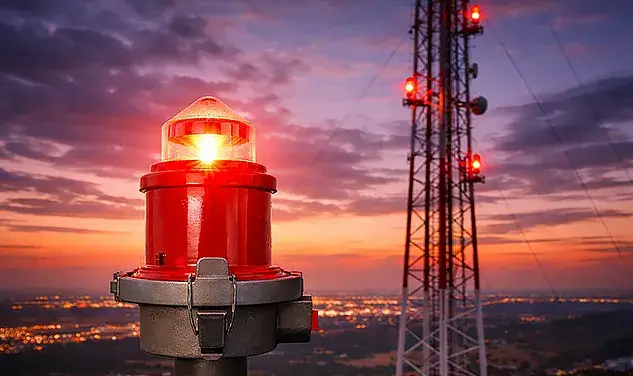
FAA L-810 obstruction lights are low-intensity, steady-burning red lights used to mark structures that may pose a hazard to aircraft. They are commonly installed on structures under 200 feet above ground level (AGL) or used as intermediate lighting on taller structures, as specified by an FAA obstruction evaluation based on structure height, location, and potential impact on navigable airspace.
L-810 obstruction lights are defined within FAA guidance, including Advisory Circular AC 70/7460-1, which outlines obstruction marking and lighting requirements for structures that may affect navigable airspace.
Quick Answer: What Is an FAA L-810 Obstruction Light?
An FAA L-810 obstruction light is a low-intensity, steady-burning red light used to improve the nighttime visibility of structures that could present a hazard to aircraft. These lights are typically used on shorter structures or as intermediate lighting on taller towers and similar installations.
Definition: FAA L-810 Obstruction Light
An FAA L-810 obstruction light is a low-intensity, steady-burning red aviation light used to mark structures that may pose a hazard to aircraft, typically installed on structures under 200 feet AGL or as intermediate lighting on taller structures.
What Is an L-810 Obstruction Light?
An L-810 obstruction light is part of the FAA obstruction lighting system used to help pilots identify structures at night.
These lights are designed to:
- Emit a steady, non-flashing red light
- Operate during nighttime hours
- Mark structures such as towers, buildings, and other elevated obstacles
L-810 lights are commonly used as part of obstruction lighting systems for communications towers, utility structures, buildings, and other installations that require nighttime marking for aviation safety.
When Are L-810 Lights Used?
L-810 lights are typically used in the following situations:
- On structures under 200 feet above ground level (AGL)
- As intermediate lighting levels on taller structures
- When specified as part of an FAA obstruction lighting determination
Final lighting requirements are determined through an FAA obstruction evaluation, which specifies the appropriate lighting system based on structure height, location, and potential impact on navigable airspace.
Common applications include:
- Communication towers
- Utility structures
- Buildings near airports
- Wind energy structures
- Other elevated obstructions requiring nighttime marking
Typical Use Cases for L-810 Obstruction Lights
- Communication towers under 200 feet
- Intermediate lighting on tall towers
- Buildings near airports requiring nighttime marking
- Wind turbines and utility structures
Key Characteristics of L-810 Lights
| Feature | Description |
|---|---|
| Intensity | Low-intensity |
| Color | Red |
| Operation | Steady-burning, non-flashing |
| Typical Use | Short structures or intermediate tower lighting |
| Power Options | LED or incandescent |
LED vs. Incandescent L-810 Lights
Many modern FAA L-810 obstruction lights use LED technology, which offers several advantages over older incandescent models.
LED L-810 Lights
- Long service life
- Lower energy consumption
- Reduced maintenance requirements
- Better long-term value in many applications
Incandescent L-810 Lights
- Lower initial purchase cost in some cases
- Shorter lamp life
- Higher maintenance needs over time
For most applications, LED L-810 lights are the preferred choice because they reduce maintenance frequency and long-term operating costs.
L-810 vs. L-864 Obstruction Lights
It is important to understand the difference between L-810 and L-864 obstruction lights when selecting the right lighting system.
| Feature | L-810 | L-864 |
|---|---|---|
| Intensity | Low | Medium |
| Operation | Steady-burning | Flashing |
| Color | Red | Red |
| Typical Use | Short structures or intermediate levels | Top beacon on taller structures in red lighting systems |
L-864 is a medium-intensity flashing red obstruction light, while L-810 is a low-intensity steady-burning red light. In many tower lighting systems, L-810 lights are used together with an L-864 top beacon to provide proper marking at different elevations.
When Should You Use L-810 vs. L-864 Lights?
Choosing between L-810 and L-864 obstruction lights depends primarily on structure height and FAA lighting requirements.
- Use L-810 lights for structures under 200 feet AGL or as intermediate lighting levels on taller structures
- Use L-864 lights as the flashing red top beacon on taller structures requiring medium-intensity obstruction lighting
In many FAA-compliant systems, both light types are used together to provide complete obstruction marking.
Where Are L-810 Lights Installed?
L-810 obstruction lights are commonly installed in locations such as:
- The top of certain shorter structures
- Intermediate levels on taller towers
- Locations identified by FAA lighting requirements
Proper fixture placement depends on the structure height, configuration, and applicable FAA guidance.
How to Choose the Right L-810 Light
When selecting an FAA L-810 obstruction light, consider the following factors:
- LED or incandescent design
- Operating voltage
- Environmental durability
- Mounting requirements
- FAA compliance and certification
Choosing an appropriate, FAA-compliant fixture helps support visibility, reliability, and long-term performance.
Frequently Asked Questions
What FAA document defines L-810 obstruction lighting requirements?
L-810 obstruction lighting is defined in FAA Advisory Circular AC 70/7460-1, which outlines marking and lighting requirements for structures that may affect navigable airspace.
Are L-810 lights required by the FAA?
L-810 lights are required when specified by an FAA obstruction evaluation, which determines appropriate lighting based on structure height and location.
Are L-810 obstruction lights flashing or steady?
L-810 obstruction lights are steady-burning red lights. They do not flash.
When is an L-810 light used instead of an L-864 light?
L-810 lights are typically used on shorter structures or as intermediate lighting on taller structures, while L-864 lights are typically used as the flashing red top beacon in red obstruction lighting systems on taller structures.
Can L-810 lights be used with LED technology?
Yes. Many modern L-810 obstruction lights are available in LED versions that offer longer life and reduced maintenance.
What structures commonly use L-810 lights?
Common applications include communication towers, buildings, utility structures, and other elevated obstructions that require nighttime marking.
Final Thoughts
FAA L-810 obstruction lights play an important role in aviation safety by helping mark structures that could be hazardous to aircraft at night. For many applications, LED L-810 lights offer an excellent combination of visibility, reliability, and reduced maintenance.
If you are evaluating obstruction lighting options, understanding the role of the L-810 is an important first step in choosing the right system.
Recent News
-
 Understand when to use FAA L-864 obstruction lights, how they work, and how to choose the right solution for marking tall structures like towers and wind turbines.Read More
-
 Learn what FAA L-810 obstruction lights are, when they are required, and how they are used in obstruction lighting systems for aviation safety.Read More
-
 Buying obstruction lights online is easy. Sign up and shop in our online store.Read More
-
 Farlight’s complete line of aircraft warning lights are now exclusively manufactured, distributed, and offered online through Flight Light Inc.Read More
-
 See the full list of Flight Light Inc. airfield lighting products that meet the requirements of the Buy American Act.Read More